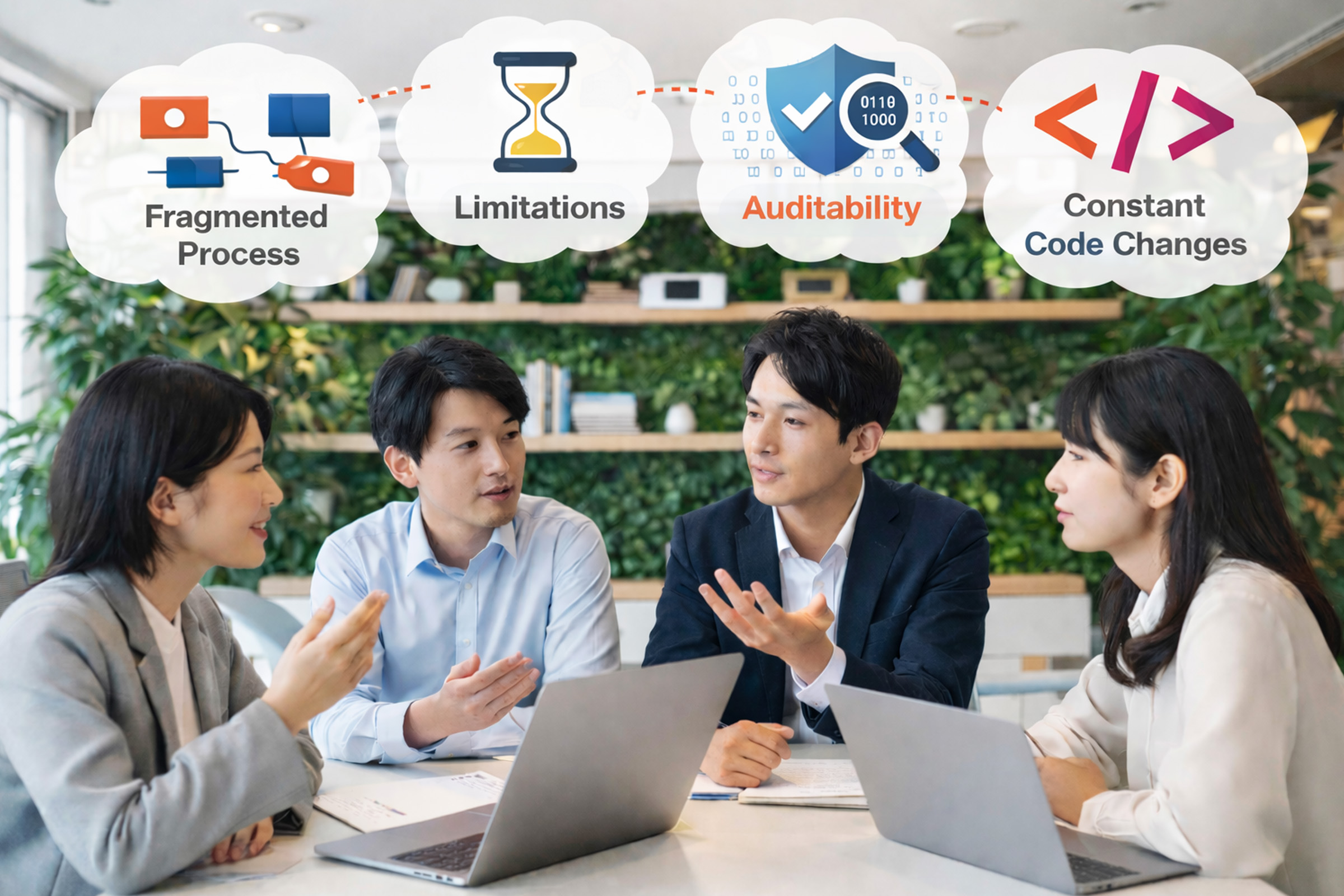
Many organizations have tried Agentforce and other AI agents, but when moving into enterprise operations, they often face the same bottlenecks:
Real workflows span multiple steps—analyze → search → match → decide → update → audit. Without orchestration, flows become fragmented and break easily.
AI execution time and external callouts are unpredictable. Running everything synchronously leads to inconsistent performance as data volume and load increase.
Enterprises must explain what the AI did, what data it used, why it made a decision, who approved it, and where it failed. Disconnected logs aren’t enough for investigation or compliance.
Hard-coded logic in Apex/Flow increases long-term cost, stalls projects at PoC, and makes it difficult to scale across new use cases.
The Agent Orchestration Framework is the “orchestration backbone” that enables Agentforce to run reliably in complex, real-world business operations.
It helps you:
Key differentiator: Metadata-driven (no hard-coding)
Workflows, stages, and agents are defined via metadata—so you can update business logic quickly without constant code changes.
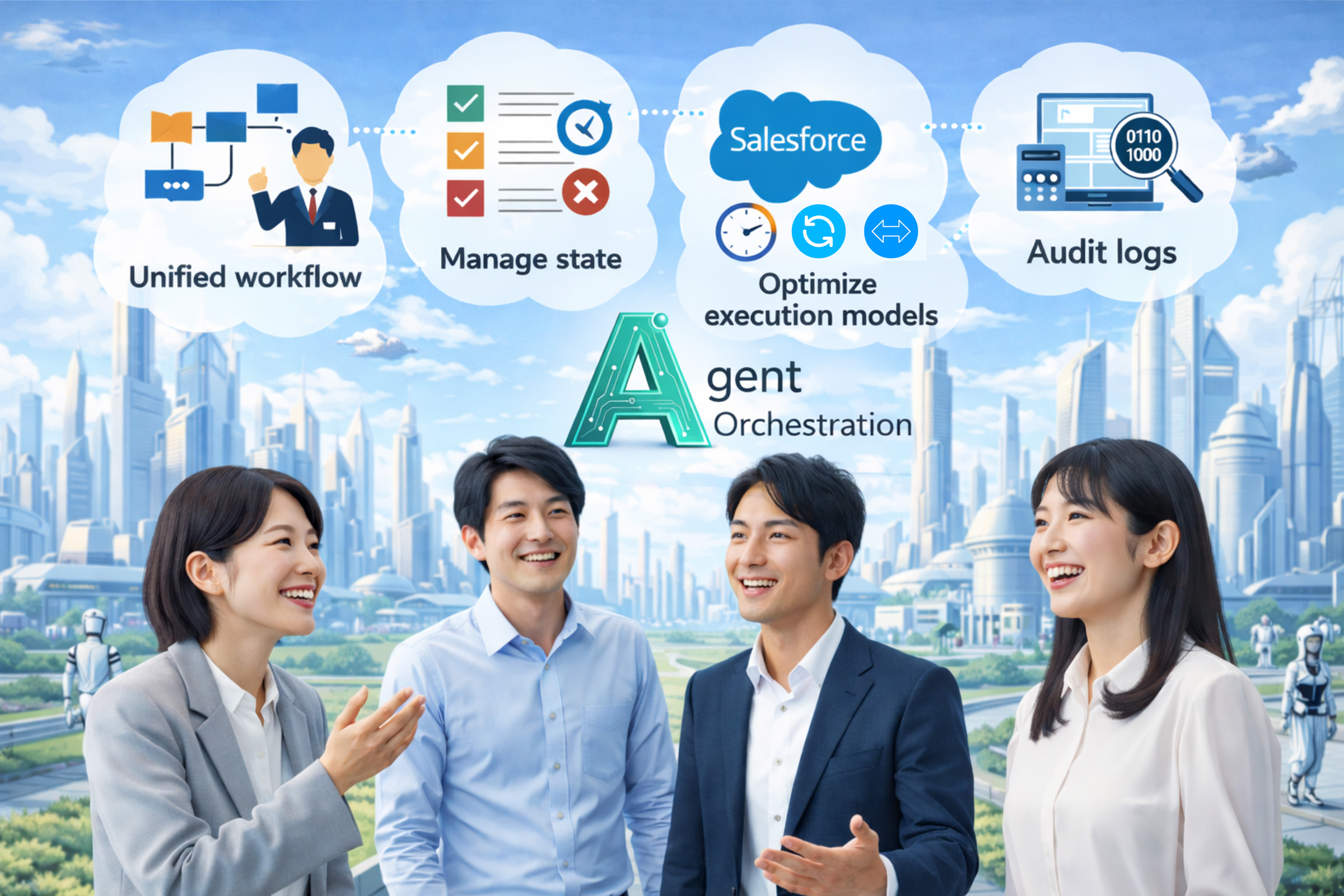
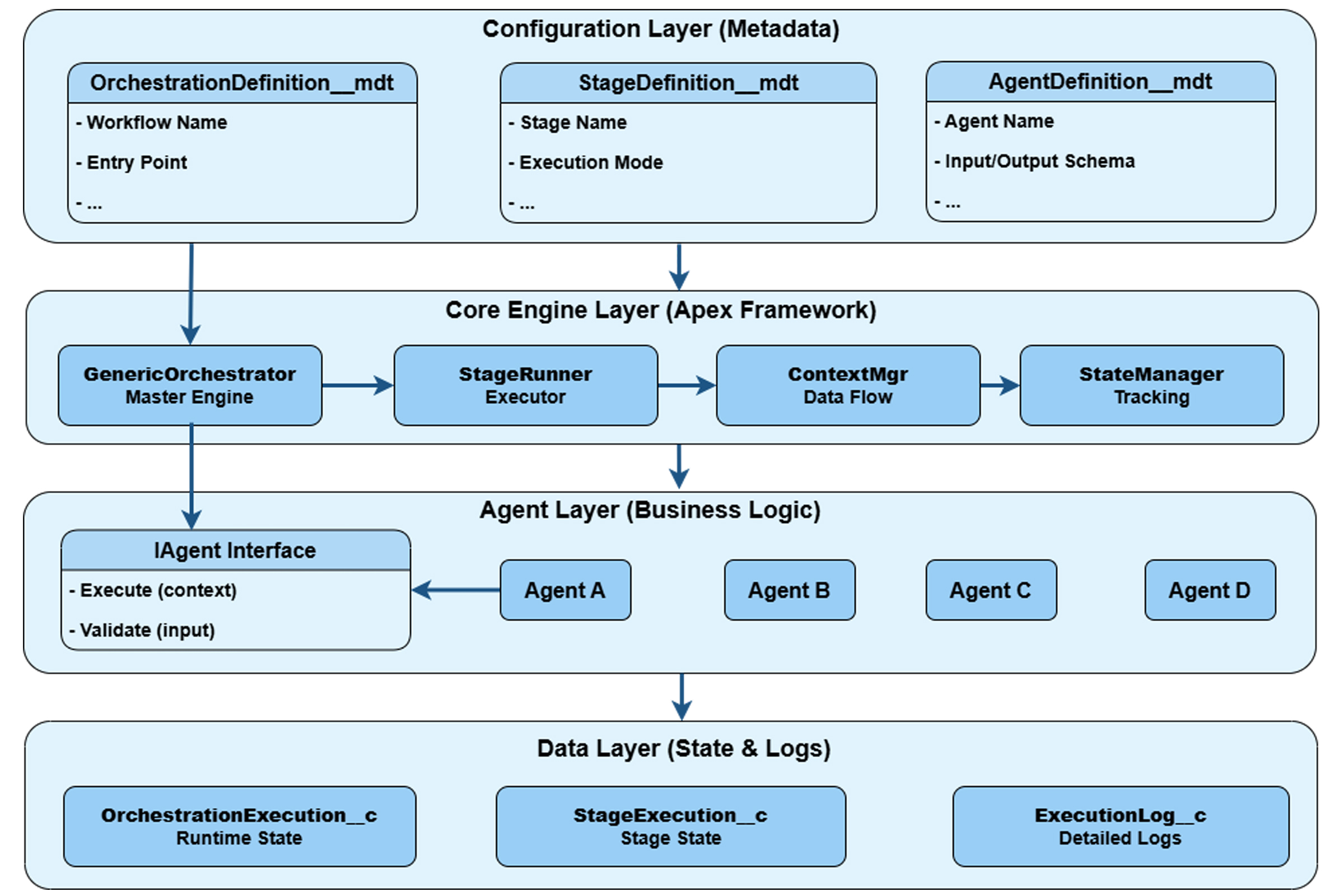
The platform follows a simple model: Metadata configuration + Orchestration engine + Agents + Logs/Audit.
Define the overall workflow, stages (conditions + execution mode), and agents/actions with input/output mapping.
Runs steps in the right order and under the right conditions, switching between sync/async execution to avoid timeouts and optimize performance.
Each agent receives structured input (schema-based), executes its task, and returns structured output to the next step.
Records workflow/stage runtime state and detailed logs for traceability, retry/resume, and production operations.
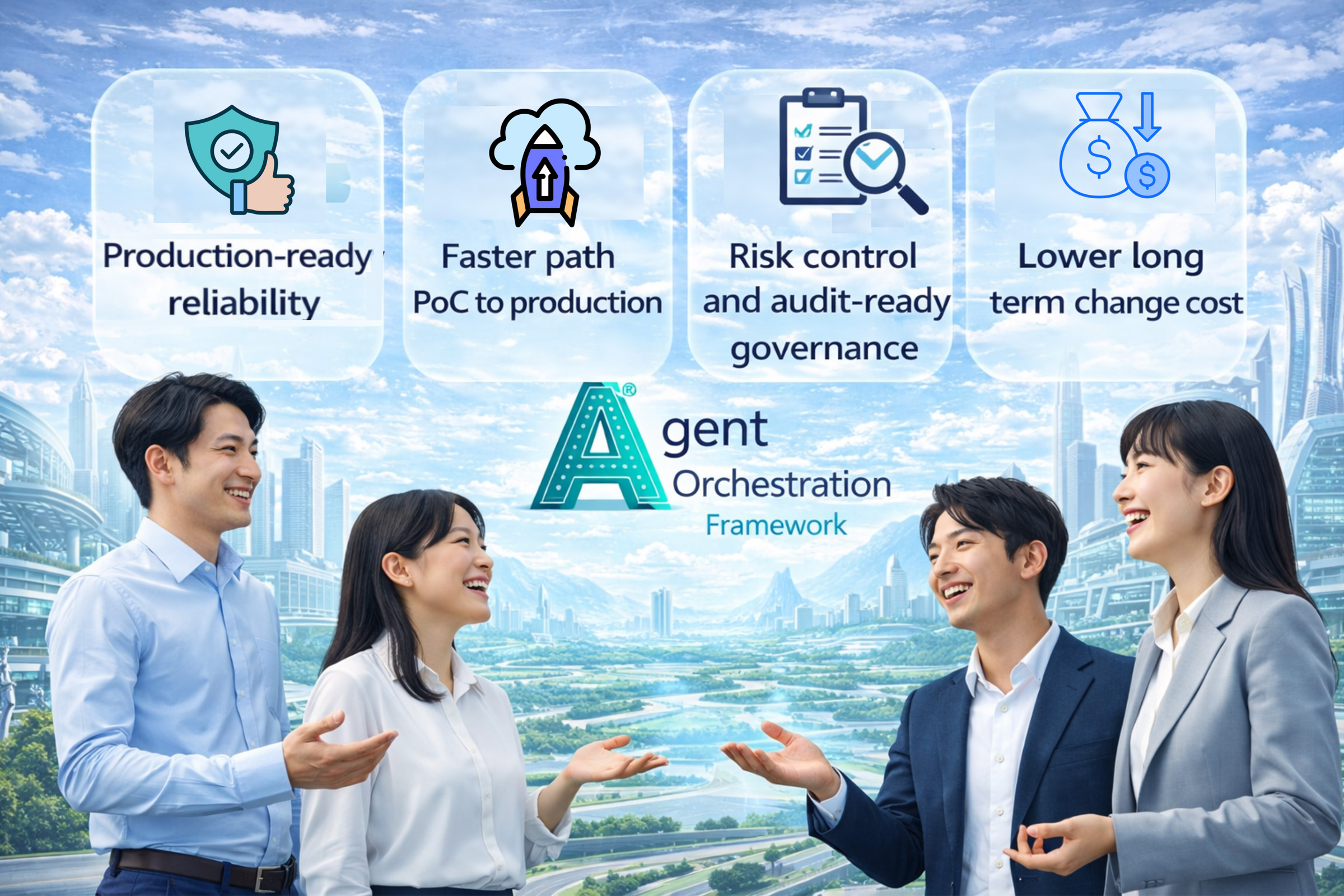
Built to run consistently with large data volumes, multiple callouts, and multi-step processing—so you don’t end up with “PoC works, production fails.”
A ready-to-use orchestration architecture (logging, state management, execution models) reduces rework and accelerates rollout.
Structured audit logs and clear execution history make incident investigation easier and support enterprise compliance requirements.
With a metadata-driven design, business logic can evolve faster with less dependency on the original developers.
Reuse one foundation to deliver multiple agents and flows—email intake, contract review, customer support triage, data enrichment, and more.
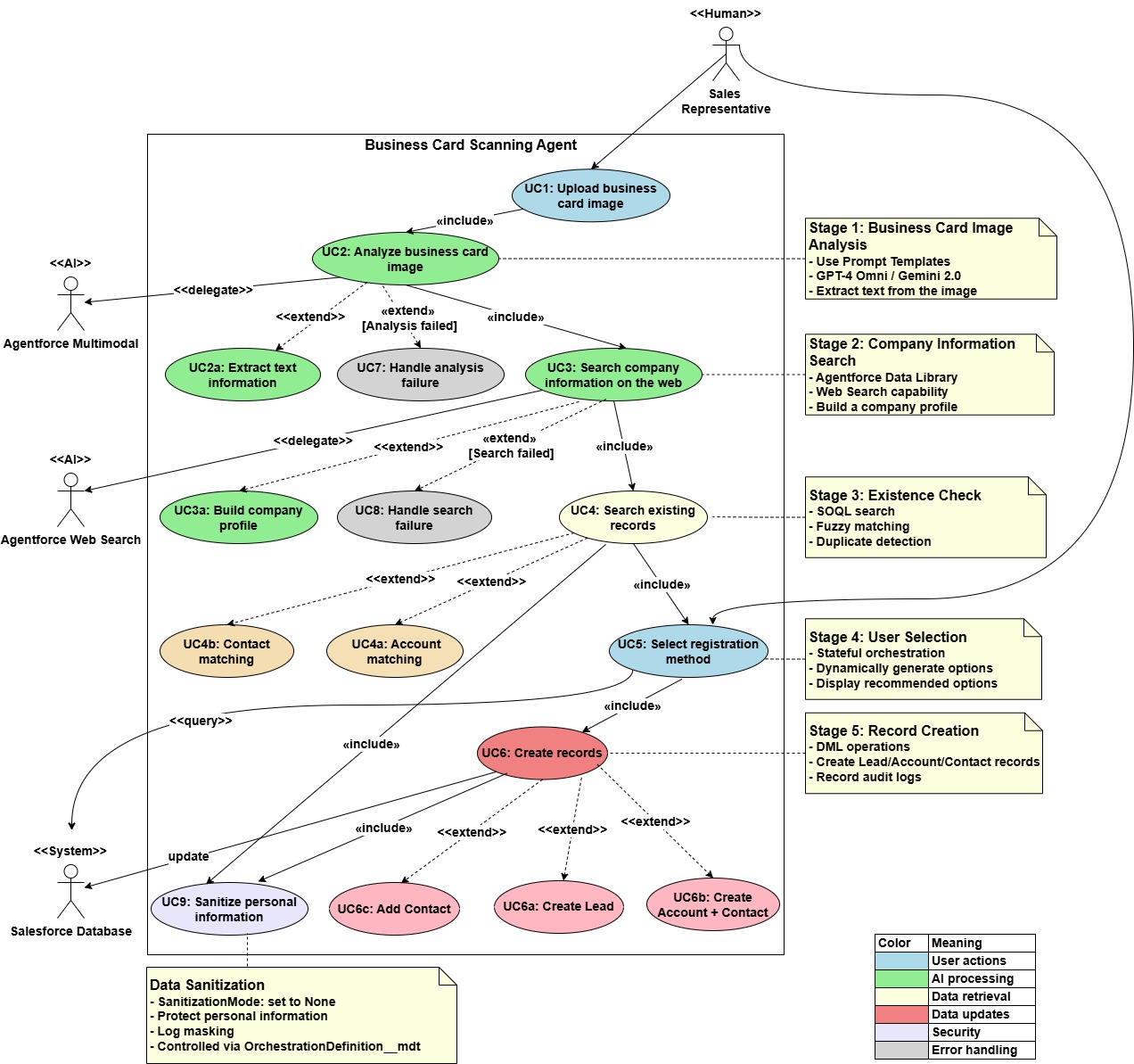
Instead of stopping at OCR, the end-to-end workflow can automate the full process:
Result: Practical, production-ready automation—less manual work, fewer duplicates and dirty data, and full traceability end to end.
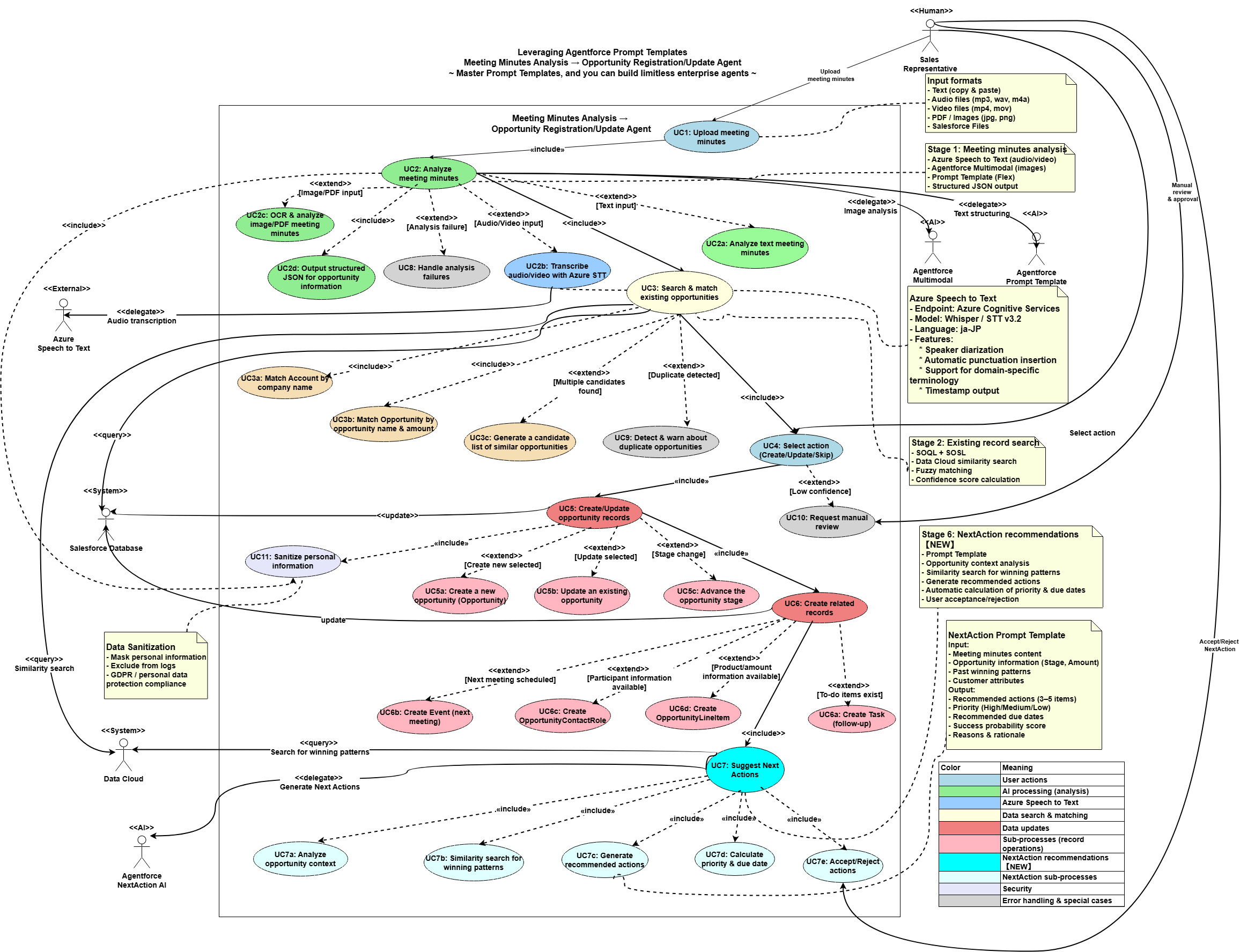
Instead of stopping at “transcribe and summarize,” the workflow automates the full sales follow-up process—from meeting minutes to Salesforce records:
Result: A practical, production-ready automation that turns meeting minutes into a complete, auditable CRM outcome—less manual input, fewer duplicates, consistent follow-up execution, and full traceability end to end.
Simple, transparent pricing for the Unmanaged Package.
One-time package to deploy the Generic Agent Orchestration Framework in your Salesforce org